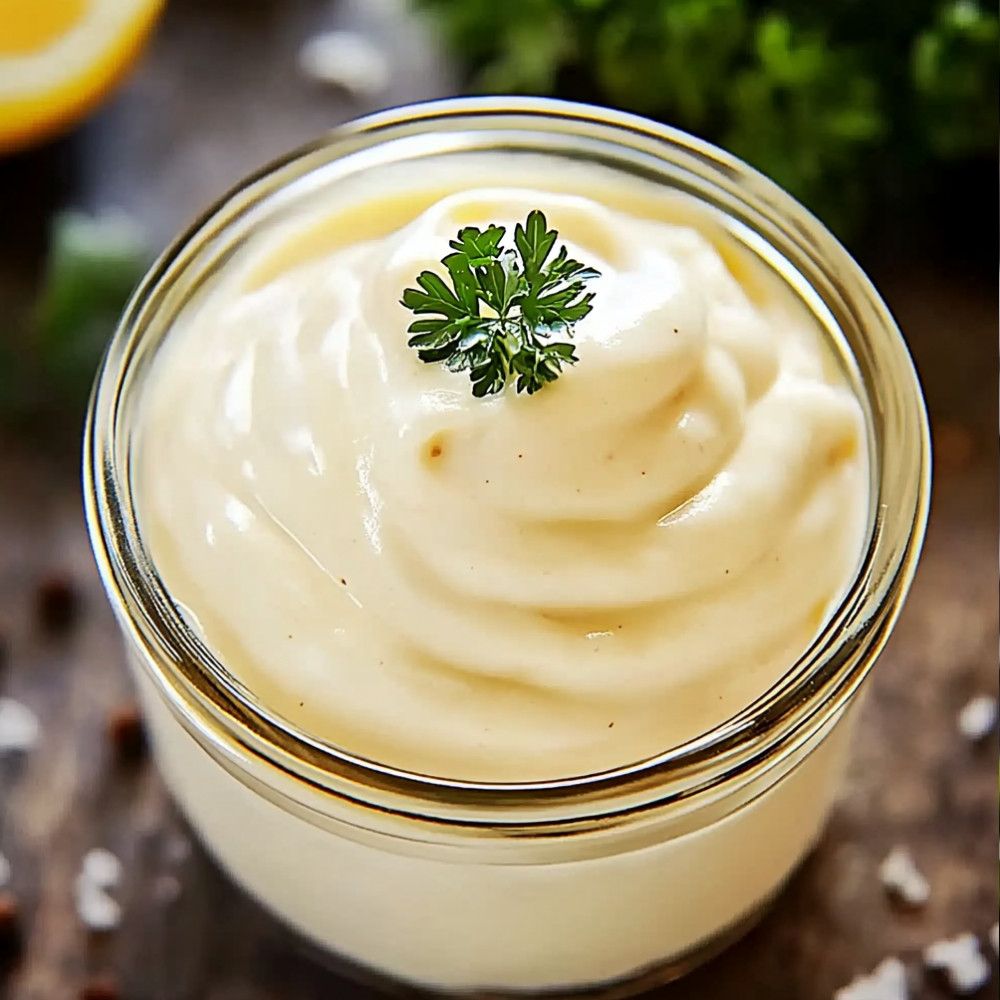
Introduction
Homemade mayonnaise is a versatile condiment that can enhance a variety of dishes with its rich and creamy texture. Making your own mayonnaise at home not only allows you to control the ingredients but also promises a fresher taste compared to store-bought versions. This simple recipe uses basic ingredients that you likely already have in your kitchen, making it easy to whip up a batch whenever you need it.
Detailed Ingredients with measures
Egg: 1 large
Lemon juice or vinegar: 1 tablespoon
Dijon mustard: 1 teaspoon
Salt: 1/4 teaspoon
Vegetable oil or another neutral oil: 1 cup
Prep Time
5 minutes
Cook Time, Total Time, Yield
Cook Time: 0 minutes
Total Time: 5 minutes
Yield: Approximately 1 cup of mayonnaise
Detailed Directions and Instructions
Step 1: Gather Ingredients
Collect all necessary ingredients: egg yolks, Dijon mustard, vinegar or lemon juice, oil, and salt.
Step 2: Prepare Equipment
Ensure you have a mixing bowl, a whisk or an immersion blender, and a measuring cup ready.
Step 3: Combine Egg Yolks and Mustard
In the mixing bowl, add the egg yolks and Dijon mustard. Whisk together until well combined.
Step 4: Add Acid
Incorporate vinegar or lemon juice into the mixture, whisking continuously to blend.
Step 5: Slowly Add Oil
Begin adding the oil slowly, starting with just a few drops while whisking vigorously. Gradually increase the amount as it begins to emulsify.
Step 6: Achieve Desired Consistency
Continue to add oil slowly while whisking until the mayonnaise reaches your preferred thickness.
Step 7: Season to Taste
Add salt to taste, whisking until fully incorporated.
Step 8: Store Homemade Mayonnaise
Transfer the mayonnaise to an airtight container and refrigerate immediately.
Notes
Pasteurization
Use pasteurized eggs if concerned about food safety.
Oil Choices
Experiment with different types of oil for varying flavors, such as olive oil or avocado oil.
Flavor Variations
Consider adding garlic, herbs, or spices for additional flavor enhancements.
Shelf Life
Homemade mayonnaise should be consumed within a week when stored properly in the refrigerator.
Cook techniques
Emulsification
The process of combining two liquids that usually do not mix, such as oil and vinegar, to create a stable mixture. This is essential for making mayonnaise, where the oils need to blend with egg yolks.
Whisking
A technique used to incorporate air into the mixture, creating a light and fluffy texture. This is particularly crucial when making mayonnaise to achieve the right consistency.
Slow Drizzling
Adding oil gradually while whisking continuously is key to forming a proper emulsion. This helps in achieving the desired thickness without breaking the mayonnaise.
Acid Adjustment
Balancing the flavors in mayonnaise by incorporating an acid, such as lemon juice or vinegar. This not only enhances the taste but also helps stabilize the emulsion.
Temperature Control
Ensuring all ingredients are at room temperature before starting can lead to better emulsification, as it prevents the mayonnaise from breaking.
FAQ
Can I use a blender instead of whisking by hand?
Yes, using a blender can make the process quicker and easier, but it’s important to add the oil slowly to ensure proper emulsification.
What can I use if I don’t have egg yolks?
You can substitute egg yolks with aquafaba (chickpea water) for a vegan version of mayonnaise.
How long does homemade mayonnaise last?
Homemade mayonnaise can last up to a week in the refrigerator if stored in an airtight container.
What should I do if my mayonnaise breaks?
You can fix broken mayonnaise by starting with a new egg yolk in a clean bowl and slowly whisking in the broken mixture.
Can I add flavors to my mayonnaise?
Absolutely! You can incorporate herbs, garlic, mustard, or spices to customize the flavor of your mayonnaise.
Conclusion
Homemade mayonnaise is a versatile and easy-to-make condiment that elevates a variety of dishes. With just a few ingredients, you can create a fresh and creamy mayo that enhances flavors while avoiding preservatives found in store-bought options. Experimenting with different oils and seasonings can lead to unique variations tailored to your taste, making it a staple in any kitchen.
More recipes suggestions and combination
Classic Aioli
Enhance your mayonnaise with garlic for a delicious aioli, perfect for dipping vegetables or spreading on sandwiches.
Herbed Mayonnaise
Add fresh herbs like dill or basil to your mayonnaise for a burst of flavor that complements seafood and roasted meats beautifully.
Curry Mayonnaise
Mix in curry powder to create a spicy and aromatic mayonnaise perfect for chicken salads or as a dipping sauce for fries.
Chipotle Mayonnaise
Incorporate chipotle peppers in adobo sauce for a smoky-spicy mayo that pairs wonderfully with grilled meats and tacos.
Lemon-Dill Sauce
Combine lemon juice and fresh dill for a zesty mayonnaise that’s ideal for dressing fish or adding to a potato salad.
Leave a Reply