Introduction
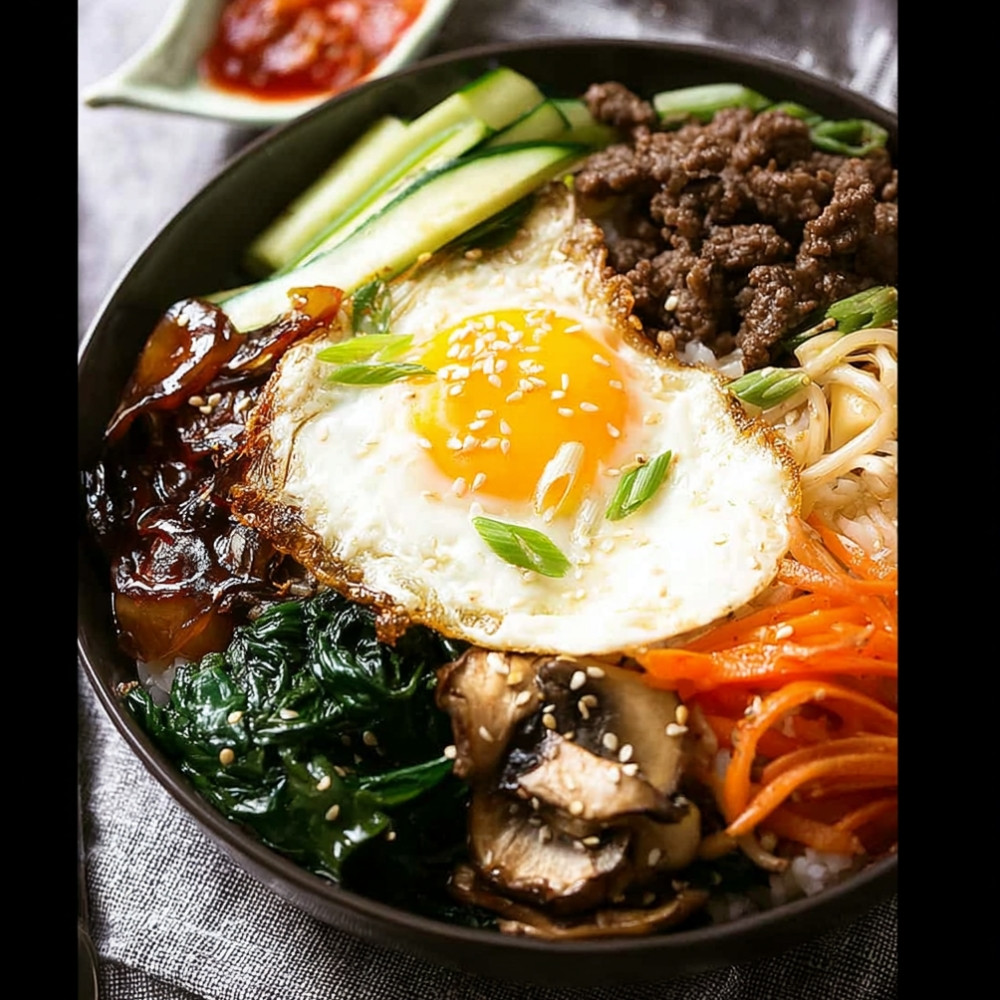
Bibimbap is a quintessential Korean dish that offers a delightful combination of flavors, textures, and colors. This traditional mixed rice dish is served with an assortment of sautéed vegetables, marinated meat, and topped with a fried egg. The ingredients are carefully arranged in a bowl, allowing for a stunning presentation. When served, a generous dollop of gochujang (Korean chili paste) adds a spicy kick, making each bite a harmonious blend of savory and spicy.
Detailed Ingredients with measures
Cooked rice – 2 cups
Spinach – 1 cup, blanched
Carrot – 1 medium, julienned
Zucchini – 1 small, julienned
Mushrooms – 1 cup, sliced
Bean sprouts – 1 cup, blanched
Marinated beef (bulgogi) – 1 cup
Eggs – 2, fried
Gochujang – to taste
Sesame oil – for drizzle
Soy sauce – for seasoning
Sesame seeds – for garnish
Green onions – for garnish
Prep Time
Prep time for this bibimbap recipe is approximately 30 minutes. This includes washing, cutting, and preparing all the vegetables and marinating the beef.
Cook Time, Total Time, Yield
Cook time is around 15 minutes, mainly for sautéing the vegetables and cooking the beef. The total time for preparing bibimbap is approximately 45 minutes. This recipe yields 2 servings but can easily be adjusted to serve more.
Detailed Directions and Instructions
Prepare Rice
Rinse the rice under cold water until the water runs clear. Combine the rice with water in a pot and bring to a boil. Once boiling, reduce to low heat, cover, and simmer for about 15 minutes. After cooking, remove from heat and let it sit, covered, for another 10 minutes.
Prepare Vegetables
While the rice is cooking, wash and prepare the vegetables. Julienne the carrots, cucumber, and zucchini. Blanch spinach in boiling water for 30 seconds, then transfer to cold water. Squeeze out excess water and chop coarsely.
Cook Mushrooms
Sauté the shiitake mushrooms in a pan over medium heat with a splash of oil. Cook until they become tender, about 5-7 minutes. Season with salt and sesame oil.
Prepare Protein
If using beef, slice it thinly and marinate with soy sauce, sugar, garlic, and sesame oil. In a hot pan, cook the beef until browned. If using a fried egg, cook on medium heat until the whites are set and edges are crispy.
Assemble Bibimbap
In individual bowls, place a serving of rice at the bottom. Artfully arrange prepared vegetables and protein on top of the rice.
Add Toppings
Top with a drizzle of gochujang (Korean chili paste) and a sprinkle of sesame seeds. Place a fried egg on top, ensuring the yolk remains runny.
Serve
Encourage everyone to mix the bibimbap together before eating. Serve with additional gochujang on the side for extra spice if desired.
Notes
Rice Type
Use short-grain or medium-grain rice for an authentic texture that clumps together nicely.
Vegetable Variations
Feel free to substitute or add other vegetables such as bean sprouts, radish, or asparagus based on preference and seasonal availability.
Protein Options
Bibimbap can be easily adapted for vegetarians by omitting meat and increasing the variety of vegetables or adding tofu.
Gochujang Storage
Store gochujang in the refrigerator after opening. It has a long shelf life and can often be used in various dishes.
Serving Tips
Serve immediately after assembling to enjoy the freshness of the vegetables and the warm rice.
Cook techniques
Preparing Vegetables
Using a combination of fresh vegetables, it’s important to julienne or slice them thinly. This ensures they cook evenly and provide a good texture in the dish.
Cooking the Rice
It’s essential to use short-grain rice and to rinse it thoroughly before cooking. This removes excess starch, resulting in a better texture. Cooking it with the right water-to-rice ratio is key for perfectly fluffy rice.
Stir-frying Ingredients
Stir-frying is a quick cooking technique that seals in flavors. Use high heat, and add ingredients in stages according to their cooking times to ensure everything is cooked perfectly.
Making Gochujang Sauce
It’s vital to combine gochujang with other ingredients like honey, sesame oil, and vinegar to create a balanced sauce. Adjust the seasoning to suit your taste.
Cooking the Egg
Frying or poaching the egg can add a creamy texture. Cooking it just until the whites are set while keeping the yolk runny makes for a perfect topping.
FAQ
Can I use other types of rice?
While short-grain rice is traditional, you can substitute with other types, keeping in mind that cooking times and water ratios may vary.
Is bibimbap customizable?
Absolutely! You can use any vegetables or proteins you prefer, making it a versatile dish perfect for using up leftovers.
What is the best way to serve bibimbap?
Bibimbap is best served in a hot stone bowl, which enhances the texture and keeps the ingredients warm.
Can I make bibimbap vegan?
Yes, simply omit the egg and any meat, and replace them with additional vegetables or plant-based protein options.
How spicy is bibimbap?
The level of spiciness can be adjusted by varying the amount of gochujang used in the dish. Start with a small amount and increase to your preference.
Conclusion
Bibimbap is a vibrant and wholesome Korean dish that beautifully combines a variety of textures, flavors, and nutrients. With its harmonious blend of vegetables, protein, and a spicy sauce, it can be tailored to personal preferences, making it an ideal meal for anyone looking to enjoy a healthy and satisfying dish. The appeal of bibimbap lies not only in its taste but also in its presentation, making it a feast for the eyes as well. Whether enjoyed at home or in a restaurant, bibimbap is a delightful culinary experience worth trying.
More recipes suggestions and combination
Kimchi Fried Rice
A flavorful dish made with kimchi and rice, stir-fried to perfection, often topped with a fried egg.
Japchae
Sweet potato noodles stir-fried with a variety of vegetables and meat, offering a unique texture and taste.
Spicy Tofu Stir-Fry
Crispy tofu sautéed with vegetables in a spicy sauce, perfect for vegetarians and tofu lovers.
Bulgogi Beef
Marinated beef grilled to perfection, bursting with savory flavors, and paired wonderfully with rice.
Korean Fried Chicken
Crispy and crunchy chicken coated in a sweet and spicy sauce, ideal as a main dish or appetizer.
Vegetable Kimbap
Korean sushi rolls filled with fresh vegetables, a light and portable meal option that’s great for brunch or a snack.
Galbi (Short Ribs)
Marinated short ribs grilled to juicy perfection, showcasing the rich flavors of Korean cuisine.
Pajeon (Korean Pancakes)
Savory pancakes filled with green onions and other vegetables, served with a soy dipping sauce for a delightful appetizer.



Leave a Reply