Introduction
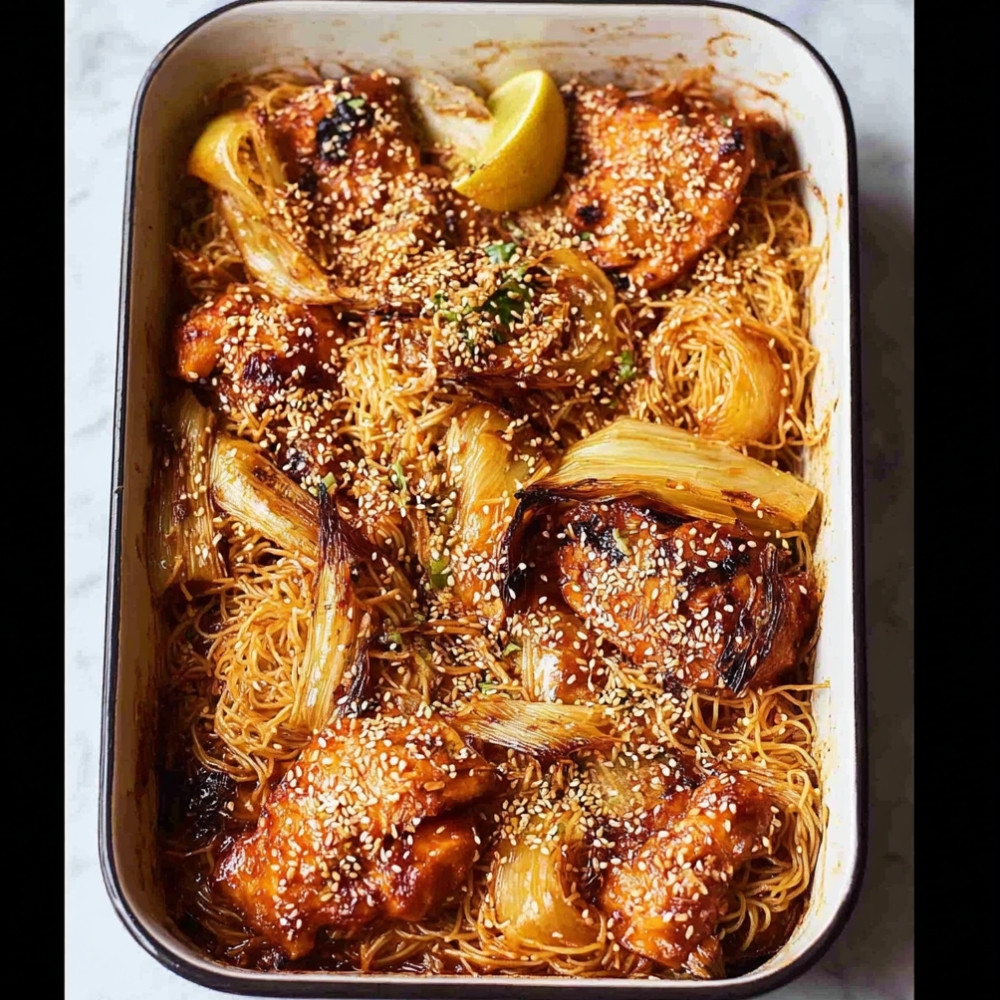
Gochujang chicken noodle traybake is a vibrant and flavorful dish that brings the essence of Korean cuisine into a simple, one-pan meal. The combination of tender chicken, spicy gochujang sauce, and perfectly cooked noodles makes for a satisfying dinner option that is both easy to prepare and incredibly delicious. This dish is perfect for weeknight dinners, offering a unique blend of flavors that will impress your family or guests without a lot of fuss.
Detailed Ingredients with measures
Chicken thighs – 1 kg, skinless and boneless
Gochujang paste – 3 tablespoons
Soy sauce – 4 tablespoons
Honey – 2 tablespoons
Rice vinegar – 1 tablespoon
Garlic – 3 cloves, minced
Ginger – 1 inch piece, minced
Red bell pepper – 1, sliced
Carrots – 2, julienned
Spring onions – 3, chopped
Egg noodles – 300 g
Sesame oil – 1 tablespoon
Salt and pepper – to taste
Coriander – for garnish
Prep Time
15 minutes
Cook Time, Total Time, Yield
Cook Time – 30 minutes
Total Time – 45 minutes
Yield – Serves 4
Detailed Directions and Instructions
Step 1: Preheat the Oven
Preheat your oven to 200°C (gas mark 6).
Step 2: Prepare the Chicken
Take chicken thighs and place them in a large bowl. Add gochujang, honey, soy sauce, sesame oil, and a pinch of salt. Mix well to coat the chicken evenly.
Step 3: Chop the Vegetables
Chop red peppers, spring onions, and broccoli into bite-sized pieces.
Step 4: Assemble the Traybake
Spread the marinated chicken thighs on a large baking tray. Scatter the chopped vegetables around the chicken.
Step 5: Bake in the Oven
Place the tray in the preheated oven and bake for 25-30 minutes or until the chicken is cooked through and the vegetables are tender.
Step 6: Cook the Noodles
While the chicken is baking, cook the rice noodles according to the package instructions. Drain and set aside.
Step 7: Combine Everything
Once the chicken is cooked, remove the tray from the oven. Toss the cooked noodles with the chicken and vegetables in the tray to combine everything well.
Step 8: Serve
Serve the gochujang chicken noodle traybake hot, garnished with fresh coriander and additional spring onions if desired.
Notes
Tip for Spice Level
Adjust the amount of gochujang according to your preference for spice.
Vegetable Variations
Feel free to use other seasonal vegetables or whatever you have on hand.
Storing Leftovers
Store any leftovers in an airtight container in the fridge for up to 3 days.
Reheating Suggestions
Reheat in the oven or microwave until fully heated through.
Serving Suggestions
Consider serving with lime wedges on the side for an extra zing.
Cook techniques
Traybake
This cooking method involves preparing all the ingredients in a single tray and baking them together. It allows the flavors to meld while simplifying the cooking process.
Marinating
Soaking the chicken in a mixture of gochujang and other ingredients helps to infuse the meat with flavor and tenderness before cooking.
Roasting
Using the oven to cook the chicken and vegetables not only cooks them evenly but also allows the ingredients to caramelize, enhancing the dish’s overall flavor and texture.
Boiling
Cooking the noodles in boiling water ensures they reach the right texture—soft yet firm—making them the perfect addition to the dish.
Combining flavors
Incorporating different ingredients such as garlic, ginger, and gochujang creates a well-rounded flavor profile that elevates the dish.
FAQ
Can I use a different type of chicken?
Yes, you can substitute chicken thighs or breasts based on your preference.
Is gochujang spicy?
Gochujang has a distinctive spice level, but its heat varies by brand, so you can adjust the quantity to suit your taste.
Can I add more vegetables?
Absolutely! Feel free to include your favorite vegetables, adjusting cooking time as necessary.
What if I don’t have gochujang?
You can use a combination of chili paste and a bit of miso as a substitute, although the flavor will differ slightly.
How do I store leftovers?
Leftovers can be stored in an airtight container in the refrigerator for up to three days. Reheat thoroughly before serving.
Conclusion
The Gochujang Chicken Noodle Traybake is a delightful fusion of flavors that brings together the spiciness of gochujang with tender chicken and hearty noodles. This recipe not only offers a satisfying meal but also showcases how easily you can create a comforting dish that appeals to varied palates. Perfect for family dinners or casual gatherings, it’s bound to become a favorite in your recipe rotation.
More recipes suggestions and combination
Sweet and Spicy Baked Chicken Wings
Try pairing sweet chili sauce with crunchy sesame seeds for a finger-licking appetizer that complements the Gochujang flavors.
Vegetable Stir-Fry with Udon Noodles
A vibrant stir-fry featuring seasonal vegetables and chewy udon noodles can serve as a delicious vegetarian side that balances the spices.
Honey Soy Glazed Salmon
This dish balances sweetness and umami, making it a great alternative protein to serve alongside your traybake.
Spicy Korean Tofu Stew
For a vegetarian option packed with flavor and spicy kick, consider a hearty tofu stew seasoned with gochugaru and soy sauce.
Garlic Sesame Broccoli
Add roasted garlic and a drizzle of sesame oil to broccoli for a simple, yet flavorful side dish that pairs perfectly with your chicken noodles.
Kimchi Fried Rice
Take advantage of leftover rice by tossing it with kimchi, vegetables, and a fried egg to create a quick and spicy meal.
Coconut Milk Pudding with Mango
Finish your meal with a refreshing dessert of coconut milk pudding topped with fresh mango for a fragrant and sweet finale.


Leave a Reply