Introduction
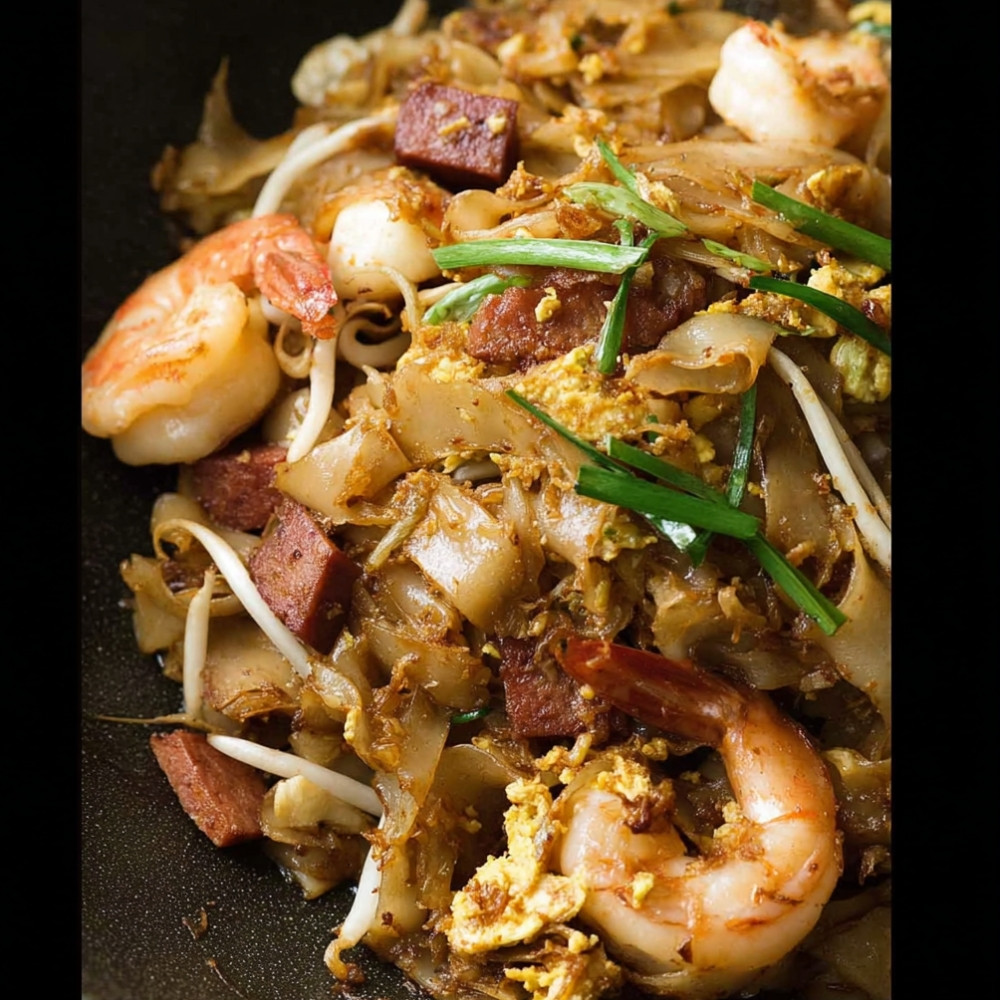
Char Kway Teow is a beloved Malaysian stir-fried noodle dish known for its rich flavors and delightful texture. This dish, which translates to “stir-fried rice cake strips,” is a staple street food that combines flat rice noodles with a variety of ingredients such as prawns, Chinese sausage, bean sprouts, and eggs. The appeal of Char Kway Teow lies in its smoky aroma, achieved through high-heat cooking, along with the perfect blend of sweet, salty, and umami flavors.
Detailed Ingredients with measures
Flat rice noodles – 400g
Prawns, peeled and deveined – 200g
Chinese sausage, sliced – 100g
Bean sprouts – 100g
Eggs – 2
Vegetable oil – 3 tablespoons
Garlic, minced – 2 cloves
Soy sauce – 2 tablespoons
Dark soy sauce – 1 tablespoon
Chili paste – 1 teaspoon (optional)
Spring onions, chopped – for garnish
Salt and pepper to taste
Prep Time
15 minutes
Cook Time, Total Time, Yield
Cook Time – 10 minutes
Total Time – 25 minutes
Yield – Serves 2-3
Detailed Directions and Instructions
Prepare the Ingredients
Ensure that all ingredients such as rice noodles, prawns, Chinese sausage, bean sprouts, chives, eggs, and seasonings are ready for use. Rinse the rice noodles in cold water and drain thoroughly to prevent sticking.
Heat the Wok
Place a wok over high heat and add oil. Allow the oil to become very hot, almost smoking, to achieve the best stir-fry results.
Add the Aromatics
In the hot wok, add minced garlic and fry for a few seconds until fragrant. Be cautious not to burn the garlic as it can create a bitter flavor.
Add the Proteins
Introduce the prawns and sliced Chinese sausage into the wok. Stir-fry until the prawns are pink and cooked through. This should take a couple of minutes.
Add the Noodles
Next, add the prepared rice noodles. Toss everything together in the wok, ensuring the noodles are mixed well with the prawns and sausage.
Add the Sauces
Pour in the soy sauce, oyster sauce, and fish sauce over the noodles. Stir-fry for a few minutes, allowing the noodles to absorb the flavors.
Add the Vegetables and Eggs
Add the bean sprouts and chopped chives to the wok. Create a small well in the center, crack eggs into the well, and scramble them. Once cooked, mix everything together thoroughly.
Final Toss
Continue to stir-fry the mixture for a minute or two, making sure all ingredients are well combined and heated through.
Serve Immediately
Serve the char kway teow hot from the wok, garnished with additional chives if desired.
Notes
Use Fresh Ingredients
For the best flavor, use fresh prawns and quality Chinese sausage.
Wok Heat is Critical
Make sure the wok is very hot before adding ingredients to achieve the desired wok hei (breath of the wok) flavor.
Customizable Dish
Feel free to add other proteins like chicken or tofu and adjust the vegetables according to personal preference.
Preparation Time
Have all ingredients prepped and ready to go, as the cooking process is fast and requires constant attention.
Storage Suggestions
If you have leftovers, store in an airtight container in the refrigerator for up to two days. Reheat thoroughly before eating.
Cook techniques
Wok Hei
Wok hei refers to the “breath of the wok,” which is essential for achieving the signature smoky flavor in char kway teow. To achieve this, use a high flame and a well-seasoned carbon steel wok.
Charring Ingredients
Charring the ingredients helps develop flavor. Use high heat to quickly sear the proteins and vegetables without overcooking them.
Stir-Frying
The key to stir-frying is to keep the ingredients moving in the wok to ensure even cooking. This technique also prevents ingredients from sticking or burning.
Layering Flavors
Adding ingredients in stages helps build a more complex flavor. Start with aromatics like garlic and follow with proteins before adding vegetables and noodles.
Incorporating Noodles
When adding noodles, gently toss them with other ingredients to avoid breaking them. This care ensures that the dish retains its texture.
FAQ
What type of noodles should I use for char kway teow?
Use flat rice noodles for the best texture and flavor in char kway teow.
Can I make char kway teow without a wok?
While a wok is preferred, you can use a large skillet if you don’t have one. Ensure it can handle high heat.
Is char kway teow traditionally spicy?
Char kway teow can be mildly spicy, depending on the type of chili sauce or fresh chilies used.
What proteins can I add to char kway teow?
Traditional proteins include shrimp, Chinese sausage, and chicken, but you can customize it to your preference.
How can I achieve restaurant-style char kway teow at home?
Use high heat, a well-seasoned wok, and fresh ingredients to replicate that restaurant-quality dish.
Conclusion
Char Kway Teow is a delicious and beloved dish that celebrates the vibrant flavors of Southeast Asian cuisine. With its stir-fried rice noodles, a perfect balance of savory ingredients, and a hint of smokiness, it’s both a comfort food and an adventure for the taste buds. Whether enjoyed at a street food stall or recreated in your own kitchen, this dish offers an authentic experience that connects you to the culinary heritage of Malaysia and Singapore.
More recipes suggestions and combination
Hokkien Mee
A satisfying noodle dish made with thick egg noodles, stir-fried with seafood and pork, tossed in a rich, savory sauce.
Bee Hoon
Light and delicate rice vermicelli noodles stir-fried with fresh vegetables and your choice of protein, perfect for a lighter meal.
Nasi Goreng
Indonesian fried rice that can be customized with various proteins and vegetables, bringing a spicy and flavorful twist to your dinner plate.
Chili Crab
A Singaporean classic featuring tender crab in a spicy, tangy tomato-based sauce, ideal for special occasions or a flavorful feast.
Satay Skewers
Grilled marinated meat skewers, served with a creamy peanut sauce, perfect for appetizers or a barbecue party.
Roti Canai
Flaky and buttery flatbread served with a side of curry for dipping, a comforting addition to any meal.
Laksa
A fragrant noodle soup that combines spicy and coconut flavors, often featuring shrimp, chicken, and an assortment of toppings.
Popiah
Fresh spring rolls that can be filled with a variety of ingredients, offering a crunchy texture and vibrant flavors in every bite.
Teochew Porridge
A comforting rice porridge typically served with an array of side dishes, perfect for a warm and satisfying meal.
Yong Tau Foo
A versatile dish of tofu and vegetables stuffed with meat or fish paste, often served in soup or with a savory sauce.