Introduction
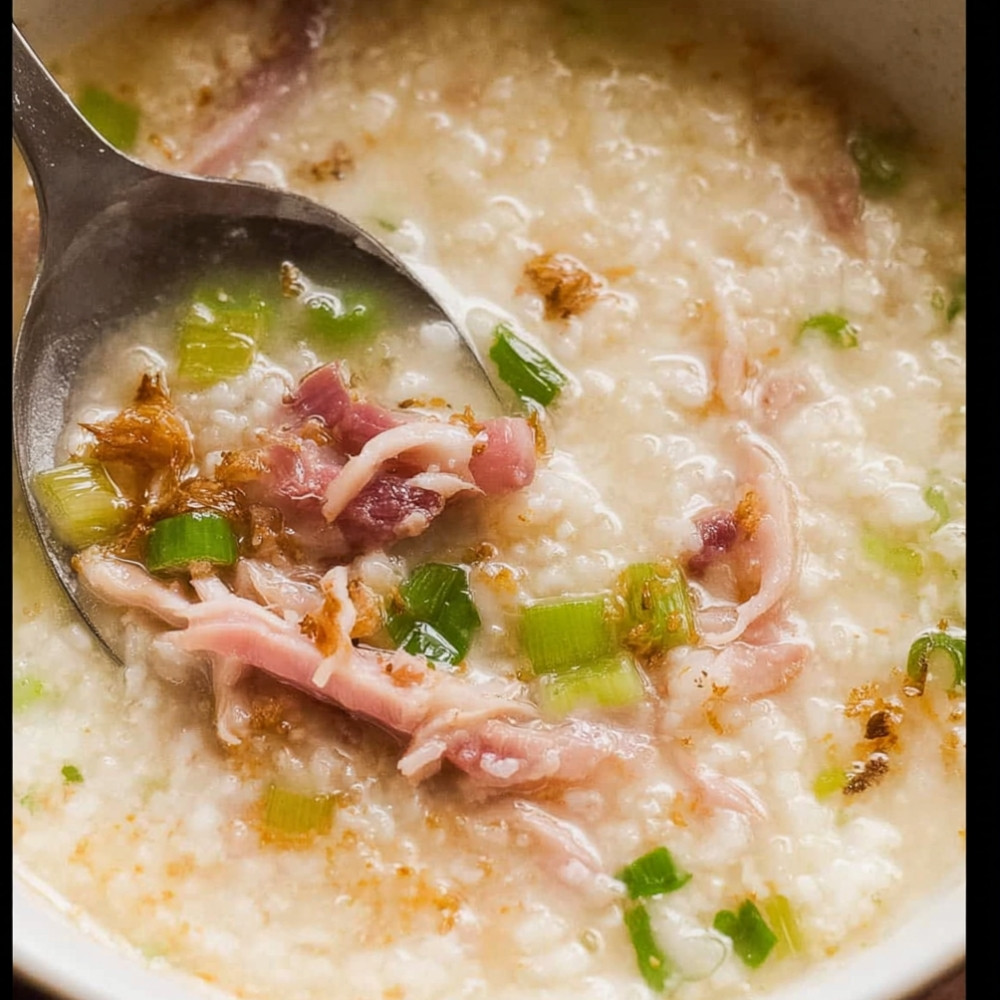
Chinese Ham Bone Rice Soup, or Congee, is a comforting and nourishing dish that blends the rich flavors of ham with creamy rice. This traditional dish is known for its versatility, making it a perfect meal for any time of day. Whether served as a breakfast option or a cozy dinner, it’s an excellent way to utilize leftover ham bones while creating a hearty and satisfying soup.
Detailed Ingredients with measures
Ham Bone – 1 large, cooked ham bone with some meat still attached
Rice – 1 cup of jasmine or short-grain rice
Water – 8 cups of water or chicken stock for added flavor
Ginger – 1 inch piece, peeled and sliced
Garlic – 2 cloves, minced
Spring Onions – 2, chopped for garnish
Soy Sauce – to taste
Salt and Pepper – to taste
Prep Time
The preparation time for this recipe is approximately 15 minutes, allowing enough time to gather the ingredients and start the cooking process.
Cook Time, Total Time, Yield
The cook time for this delicious soup is around 1 hour. When combined with the prep time, the total time for preparation and cooking will be approximately 1 hour and 15 minutes. This recipe yields about 4 servings, making it a perfect dish to share with family or friends. Enjoy the warmth and flavor of this delightful ham bone rice soup!
Detailed Directions and Instructions
Prepare the Ham Bone
Start by rinsing the ham bone under cold water to remove any excess salt and impurities. This helps in achieving a cleaner flavor in the soup.
Soak the Rice
Rinse the rice under cold water until the water runs clear, then soak it in cold water for at least 30 minutes. This step will help achieve a smooth texture for the congee.
Cook the Soup Base
In a large pot, add the prepared ham bone and cover it with water. Bring it to a boil over medium-high heat. Skim off any foam that rises to the surface to ensure clarity.
Add Ingredients
Once boiling, reduce the heat and add the soaked rice into the pot. Stir well to combine and prevent sticking.
Simmer the Congee
Cover the pot and let it simmer over low heat. Stir occasionally to prevent the rice from clumping together. The cooking time should be around 1.5 to 2 hours, or until the rice has broken down and reached a creamy consistency.
Season the Soup
After cooking, taste the congee and season with salt according to your preference. You may also want to remove the ham bone at this point.
Optional Toppings
Before serving, consider adding toppings such as sliced green onions, sesame oil, or pepper for enhanced flavor.
Notes
Ham Bone Selection
Choose a ham bone that has some meat remaining for added flavor in the soup.
Rice Type
For a smoother consistency, use short-grain rice. However, any rice can be used based on personal preference.
Storage and Reheating
Leftover congee can be stored in an airtight container in the refrigerator for up to three days. When reheating, add a little water to loosen the consistency if it thickens too much.
Adjusting Thickness
If you prefer a thinner congee, adjust the liquid quantity during cooking based on your desired consistency.
Flavor Variations
Feel free to experiment with additional ingredients, such as ginger, garlic, or soy sauce, for a personalized flavor profile in your congee.
Cook techniques
Boiling
Boiling is a foundational technique used in making congee. The rice is cooked in a large volume of water, which results in a creamy, smooth texture.
Simmering
Simmering allows the flavors of the ham bone and other ingredients to meld together effectively. A gentle simmer ensures the congee does not stick to the bottom of the pot and allows for proper cooking.
Straining
Straining is sometimes used to achieve a smoother texture in the soup. After cooking, you may choose to strain the congee to remove any solid particles, ensuring a velvety consistency.
Seasoning
Seasoning is critical in enhancing the flavor of the congee. Adding salt and other flavorings at the right time can make a significant difference in the overall taste of the dish.
Garnishing
Garnishing adds visual appeal and can enhance the flavor profile of the dish. Fresh herbs, scallions, or fried onion can be sprinkled on top before serving.
FAQ
Can I use different types of rice for congee?
Yes, while short-grain rice is traditional, you can use other varieties like jasmine or long-grain rice, but the texture may vary.
How long should I cook the rice for congee?
Generally, cooking rice for congee takes about 1 to 1.5 hours, depending on the desired thickness and creaminess.
Can I make congee in advance?
Yes, congee can be made in advance and stored in the refrigerator for up to a few days. Reheat with additional water to adjust the consistency.
What can I add to my congee for extra flavor?
You can add a variety of ingredients like soy sauce, sesame oil, or pickled vegetables to enhance the flavor of your congee.
Is congee gluten-free?
Yes, congee is typically gluten-free, as it is made with rice. Just ensure any additional sauces or ingredients added are also gluten-free.
Conclusion
The Chinese Ham Bone Rice Soup Congee is a comforting dish that brings warmth and satisfaction. Its rich broth, combined with tender rice and ham flavors, offers a delightful dining experience. Perfect for a hearty breakfast or a comforting meal at any time, it’s a simple yet nutritious option that can be tailored to cater to personal tastes.
More recipes suggestions and combination
Chicken and Mushroom Congee
A flavorful variation using tender chicken pieces and earthy mushrooms, enhancing the broth’s richness.
Vegetable and Tofu Congee
This vegetarian version incorporates seasonal vegetables and soft tofu, making it a healthy and satisfying choice.
Seafood Congee
Infuse the congee with shrimp, scallops, and fish, creating a delicious seafood broth that’s brimming with flavor.
Pork and Century Egg Congee
Combining shredded pork and century eggs adds unique flavors and a touch of creaminess to the congee.
Spicy Beef Congee
For those who enjoy a kick, adding ground beef and chili peppers can bring a spicy and hearty twist to the traditional recipe.