Introduction
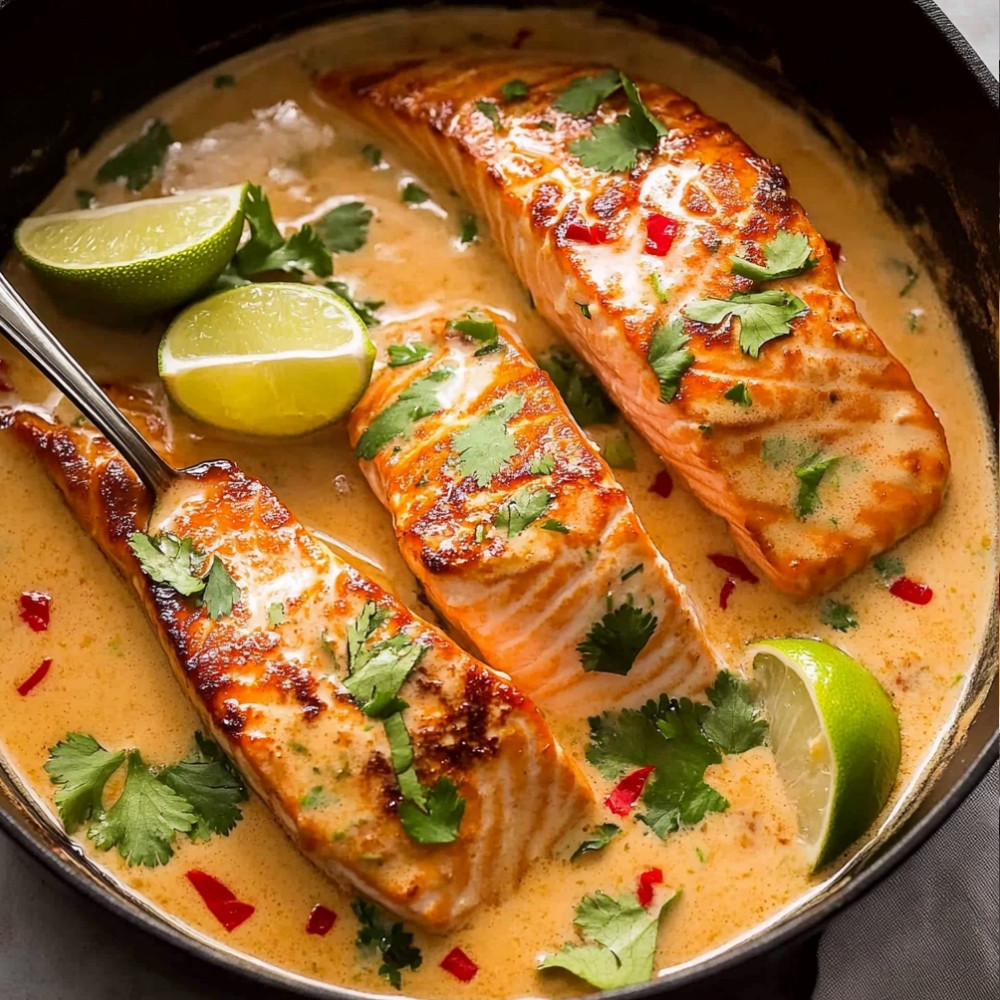
Poached salmon in coconut lime sauce is a delightful and vibrant dish that combines the rich, tender texture of salmon with a refreshing and zesty sauce. This recipe presents an ideal balance of flavors, showcasing the creaminess of coconut milk paired with the tang of lime. Not only is this dish simple to prepare, but it is also incredibly nutritious, making it a perfect choice for a weeknight dinner or a special occasion.
Detailed Ingredients with measures
– Salmon fillets: 4 pieces (approximately 6 ounces each)
– Coconut milk: 1 can (about 13.5 ounces)
– Fresh lime juice: 2 tablespoons
– Lime zest: 1 teaspoon
– Garlic: 2 cloves, minced
– Ginger: 1 teaspoon, grated
– Salt: 1 teaspoon
– Fresh cilantro: for garnish
– Optional: sliced lime for serving
Prep Time
Prep time for this delicious poached salmon dish is about 10 minutes. This quick preparation allows you to focus more on cooking the salmon to perfection and ensuring the sauce is well-balanced.
Cook Time, Total Time, Yield
The cooking time for poached salmon in coconut lime sauce is approximately 15 minutes. Thus, the total time to prepare and cook this delicious meal is about 25 minutes. This recipe yields four servings, making it perfect for a family dinner or a gathering with friends. Enjoy this delectable dish with a side of rice or steamed vegetables for a complete meal.
Detailed Directions and Instructions
Step 1: Prepare the Sauce
In a saucepan over medium heat, combine coconut milk, lime juice, fish sauce, and sugar. Stir well to ensure the ingredients are mixed. Allow the mixture to come to a gentle simmer.
Step 2: Infuse the Sauce
Add garlic and ginger to the saucepan. Cook for 2-3 minutes until aromatic, stirring occasionally to prevent burning.
Step 3: Add the Salmon
Place the salmon fillets, skin side up, into the sauce. Ensure the fillets are fully submerged. Reduce the heat to low and cover the saucepan to poach the salmon gently.
Step 4: Poach the Salmon
Allow the salmon to poach for about 5-7 minutes, depending on the thickness of the fillets. Check for doneness and remove from heat when the salmon is opaque and flakes easily with a fork.
Step 5: Serve
Using a slotted spatula, remove the salmon from the sauce and place it on serving plates. Drizzle with the coconut lime sauce and garnish with fresh cilantro and lime wedges.
Notes
Note 1: Freshness of Ingredients
For the best flavor, use fresh salmon fillets and freshly squeezed lime juice.
Note 2: Serving Suggestions
This dish pairs well with steamed rice or quinoa.
Note 3: Adjusting Spice Level
Feel free to add chili flakes or fresh sliced chilies to the sauce for a spicy kick.
Note 4: Storing Leftovers
Store any leftover salmon and sauce in an airtight container in the refrigerator for up to 2 days.
Note 5: Cooking Time Variations
Cooking times may vary based on the thickness of the salmon fillets. Adjust accordingly to achieve the desired doneness.
Cook techniques
Poaching
Poaching is a gentle cooking technique that involves simmering food in liquid. For poached salmon, it’s essential to maintain a low temperature to achieve tenderness without losing moisture.
Creating a Flavorful Broth
To enhance the taste of the poached salmon, a broth made with coconut milk, lime juice, and aromatics is used. This infuses the fish with rich flavors while keeping it moist.
Infusing Flavors
Adding ingredients like ginger, garlic, and herbs to the poaching liquid allows the salmon to absorb these flavors during cooking, resulting in a more complex dish.
Finishing Techniques
After poaching, it’s beneficial to let the salmon rest in the poaching liquid for a few minutes. This allows for the flavors to deepen and ensures the fish stays tender.
Serving Suggestions
Pair the poached salmon with vibrant sides such as steamed vegetables, rice, or a fresh salad to complement the coconut-lime sauce and create a complete meal.
FAQ
What type of salmon is best for poaching?
Salmon fillets with a good balance of fat, like Atlantic or king salmon, are ideal for poaching as they remain moist and tender throughout the cooking process.
Can I use other types of fish?
Yes, you can poach other types of fish such as trout or tilapia, but cooking times may vary depending on the thickness of the fillets.
How can I tell when the salmon is done cooking?
The salmon is done when it flakes easily with a fork and has turned opaque throughout. A good indicator is an internal temperature of 145°F (63°C).
How can I adjust the flavors in the poaching liquid?
Feel free to customize the poaching liquid by adding different herbs, spices, or citrus to match your taste preferences or to experiment with new flavor profiles.
Can I prepare the salmon in advance?
Yes, you can poach the salmon ahead of time and store it in the refrigerator. Just be sure to keep it in the poaching liquid to retain moisture.
Conclusion
The poached salmon in coconut lime sauce is a delightful dish that combines the richness of salmon with the vibrant flavors of coconut and lime. This recipe not only provides a stunning presentation but also delivers a nutritious meal that is easy to prepare. Enjoying this dish can elevate your dining experience, offering a taste of tropical freshness that is both satisfying and healthy.
More recipes suggestions and combination
Grilled Shrimp Tacos with Mango Salsa
Pair your poached salmon with grilled shrimp tacos topped with fresh mango salsa for a tropical twist. The combination of flavors will complement each other beautifully.
Coconut Rice
Serve your salmon over a bed of creamy coconut rice which will enhance the coconut flavor in the sauce and provide a delightful texture contrast.
Spicy Roasted Vegetables
Accompany your dish with a side of spicy roasted vegetables. Their charred flavor will contrast nicely with the tender salmon and bright sauce.
Quinoa Salad with Avocado and Lime
A refreshing quinoa salad with avocado, lime, and herbs makes a perfect light side dish that balances the richness of the salmon.
Chilled Cucumber Soup
Start your meal with a chilled cucumber soup that offers a refreshing burst of coolness, perfectly matching the tropical elements of the main dish.