Introduction
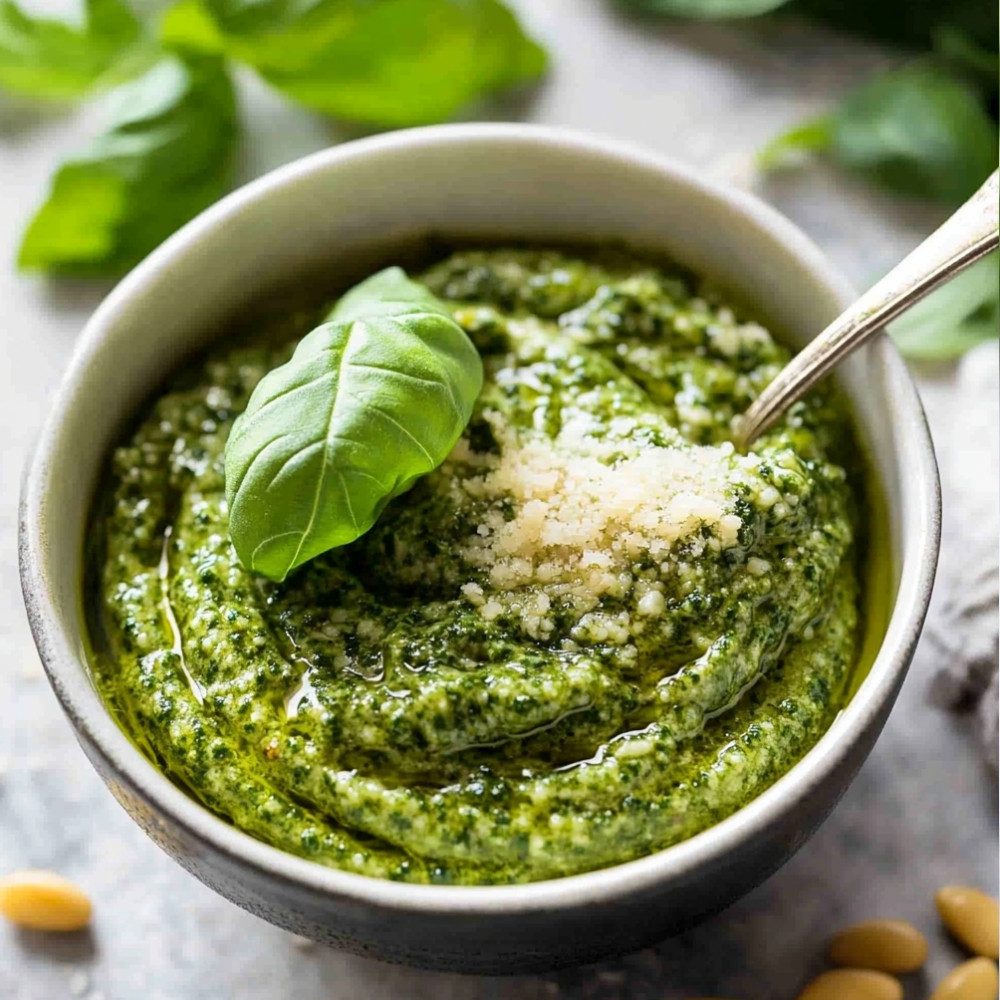
Pesto, a vibrant and aromatic sauce originating from Italy, has gained worldwide popularity for its versatility and flavor. Traditionally made with fresh basil, garlic, pine nuts, Parmesan cheese, and olive oil, pesto can enhance a variety of dishes, from pasta to sandwiches. This article explores a classic pesto recipe and how you can easily make your own at home, delivering fresh flavors and a culinary touch.
Detailed Ingredients with measures
Basil leaves (2 cups, packed)
Garlic (2 cloves)
Pine nuts (1/3 cup)
Parmesan cheese (1/2 cup, grated)
Olive oil (1/2 cup)
Salt (1/2 teaspoon)
Pepper (to taste)
Prep Time
10 minutes
Cook Time, Total Time, Yield
Cook Time: 0 minutes
Total Time: 10 minutes
Yield: Approximately 1 cup of pesto
Detailed Directions and Instructions
Prepare the Basil Leaves
Start by rinsing the fresh basil leaves thoroughly under cold water to remove any dirt or debris. Gently pat them dry with a clean kitchen towel or use a salad spinner to remove excess moisture.
Toast the Pine Nuts
In a dry skillet over medium heat, add the pine nuts. Toast them lightly, stirring frequently, until they are golden brown and fragrant. This should take about 3 to 5 minutes. Be cautious not to burn them, as they can become bitter.
Combine Ingredients in a Processor
In a food processor, combine the basil leaves, toasted pine nuts, garlic cloves, and salt. Pulse the mixture until the basil is finely chopped.
Add Olive Oil
While the processor is running, slowly drizzle in the olive oil. Continue processing until the mixture is well combined and reaches your desired consistency.
Add Parmesan Cheese
Stop the processor and scrape down the sides. Add the grated Parmesan cheese and pulse a few more times until everything is mixed well. If the pesto is too thick, you can add a bit more olive oil to loosen it.
Taste and Adjust Seasoning
Taste your pesto and adjust the seasoning as necessary. You may want to add more salt, cheese, or a squeeze of lemon juice for freshness.
Store or Serve
Transfer the pesto to an airtight container. If not using immediately, drizzle a thin layer of olive oil over the surface to prevent oxidation. The pesto can be stored in the refrigerator for up to a week or frozen for longer storage.
Notes
Basil Alternatives
If fresh basil is unavailable, you can experiment with other herbs such as spinach, arugula, or even cilantro for a unique flavor.
Pine Nut Substitutes
If you prefer, walnuts, almonds, or pecans can be used instead of pine nuts. Each nut will impart a slightly different flavor profile to the pesto.
Adjustment Tips
Feel free to customize the proportions of ingredients based on your taste preference. You might like it nuttier, cheesier, or more garlicky.
Serving Suggestions
Pesto can be used in a variety of dishes such as pasta, sandwiches, as a pizza topping, or as a dip for vegetables or bread.
Freezing Pesto
To freeze pesto, consider using ice cube trays to portion out servings. Once frozen, transfer the cubes to a freezer bag for easy storage.
Cook techniques
How to use fresh basil
Using fresh basil is essential for an authentic pesto. Select vibrant green leaves and avoid any that are wilted or discolored. Rinse them gently, pat dry, and remove the stems before adding them to your pestle or food processor.
How to toast pine nuts
Toasting pine nuts brings out their natural oils and enhances their flavor. Heat a dry skillet over medium heat, add the pine nuts, and stir frequently for about 3 to 5 minutes until they are golden and fragrant. Ensure you don’t let them burn.
How to choose olive oil
Opt for high-quality extra virgin olive oil for the best flavor in your pesto. Look for oil that is rich in flavor and aroma, preferably from regions known for their olives. The oil should be free from any off-flavors or excessive bitterness.
How to blend your pesto
For a smooth pesto, combine basil leaves, toasted pine nuts, garlic, and cheese in a food processor. Pulse a few times before slowly adding olive oil while blending. Scrape down the sides as needed to ensure even mixing.
How to store pesto
Pesto can be stored in an airtight container in the refrigerator. To maintain its vibrant color, drizzle a thin layer of olive oil over the surface before sealing. It can also be frozen in ice cube trays for longer storage.
FAQ
Can I use other nuts instead of pine nuts?
Yes, you can substitute pine nuts with walnuts, almonds, or hazelnuts. Each nut will give a different flavor profile to your pesto.
Is it necessary to use cheese in pesto?
While traditional pesto contains cheese, you can make a dairy-free version by omitting it or using nutritional yeast for a similar umami flavor.
What if I can’t find fresh basil?
If fresh basil is unavailable, you can use other herbs to create variations, such as arugula, spinach, or parsley, but the flavor will vary from traditional pesto.
How can I make pesto vegan?
To make vegan pesto, simply omit the cheese or substitute it with a cheese alternative, such as nutritional yeast or cashew cheese.
How do I know when my pesto is done?
Your pesto is done when it has reached your desired consistency. Some prefer it chunky, while others prefer a smooth texture. Taste it and adjust with more oil or salt if needed.
Conclusion
Pesto is a versatile and vibrant sauce that can elevate a variety of dishes. Whether used as a dressing, a dip, or a flavor enhancer, the balanced combination of fresh basil, garlic, nuts, cheese, and olive oil makes it a culinary favorite. With its simple preparation and robust flavor, pesto is a delightful addition to countless meals, inviting creativity and experimentation in the kitchen.
More recipes suggestions and combination
Pesto Pasta
Toss your favorite pasta with freshly made pesto and add vegetables like cherry tomatoes and asparagus for a colorful dish.
Pesto Pizza
Spread pesto on pizza dough as a base sauce, then top with mozzarella, sliced tomatoes, and arugula after baking.
Pesto Chicken
Marinate chicken breasts in pesto before grilling or baking for a flavorful and easy main dish.
Pesto Salad Dressing
Combine pesto with a splash of lemon juice and olive oil for a zesty salad dressing.
Pesto Soup
Add pesto to vegetable or chicken soup for an extra depth of flavor and vibrant color.
Pesto Sandwich Spread
Use pesto as a sandwich spread alongside meats and cheeses for added taste and excitement.
Pesto Quesadillas
Spread pesto inside tortilla wraps with cheese and grill for a quick snack or meal.
Pesto Risotto
Stir pesto into creamy risotto at the end of cooking for a burst of herby flavor.
Pesto Roasted Vegetables
Toss seasonal vegetables in pesto before roasting them for a delicious and aromatic side dish.
Pesto Deviled Eggs
Mix pesto into the egg yolk filling for a unique twist on classic deviled eggs.